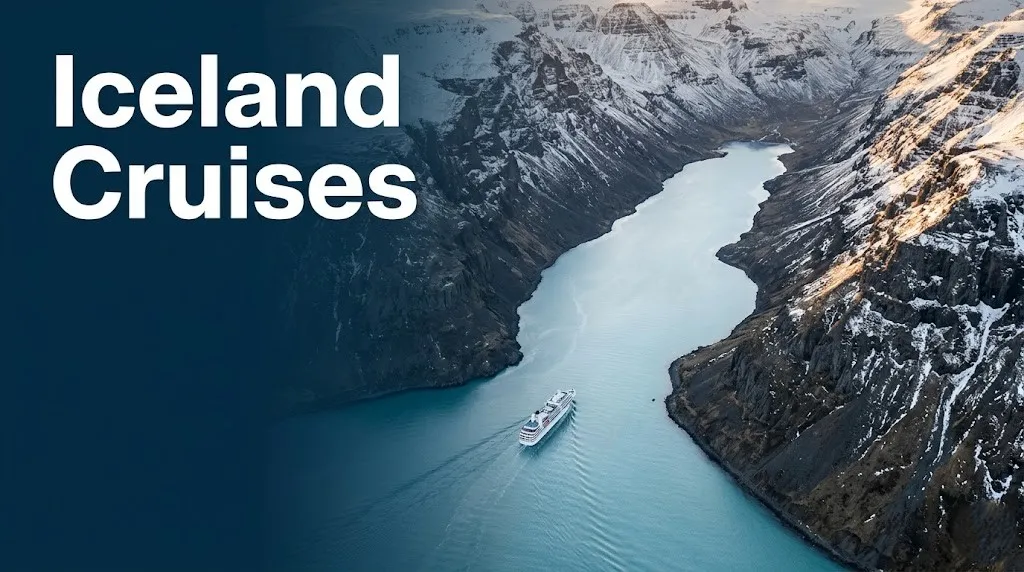
Iceland Cruises 2026: Best Lines, Ports, and Itineraries
Iceland cruises deliver some of the most port-intensive itineraries available on any ocean route. Few destinations combine active volcanoes, glacier lagoons, whale-watching bays, and walkable capital cities in one sailing.
According to the Cruise Lines International Association, Iceland sailings have seen consistent demand growth since 2022. Demand for 2026 departures is tracking earlier booking windows than pre-pandemic norms.
This article covers the best cruise lines, specific ships, honest port assessments, and real cost guidance. It addresses first-time cruisers, solo travelers, families, and luxury seekers separately throughout.
Iceland Cruises: What This Destination Actually Delivers
Iceland cruises offer something most ocean itineraries do not: genuinely remote, uncrowded ports paired with dramatic natural scenery.
Unlike Caribbean itineraries, Iceland ports rarely have large commercial tourism infrastructure. That means passengers who plan ahead experience something closer to genuine discovery.
First-time cruisers should know that Iceland itineraries are not relaxing beach cruises. Port days are active, weather-dependent, and require planning before you board.
Experienced cruisers often rate Iceland as one of their highest-satisfaction sailings. The scenery changes dramatically between ports, which keeps even veteran travelers engaged.
The honest limitation: Iceland cruises cost significantly more than Caribbean equivalents. The positioning cost, fuel surcharges, and premium shore excursion pricing make this one of the higher-cost ocean cruise regions.
Insider Tip:
- Most Iceland cruise ports are tender ports or small harbor stops; rough weather can cancel tenders entirely
- Pre-booking popular shore activities like the Blue Lagoon is non-negotiable; walk-up availability is extremely limited
- Budget travelers will find Iceland cruise total costs (including shore expenses) significantly above a comparable Caribbean sailing
Iceland Cruises 2026: What Changes This Season
Iceland cruises 2026 are booking faster than 2025 equivalents, with peak July and August sailings showing lower availability by early 2025.
The European Travel Information and Authorization System (ETIAS), once implemented, will affect US citizens entering European ports. Verify current ETIAS requirements directly with your cruise line or the official EU immigration authority before booking any 2026 sailing.
For budget travelers: shoulder-season May through June 2026 sailings offer meaningfully lower fares than peak summer. Verify availability early; these windows fill faster than most travelers expect.
Several cruise lines have added new 2026 Iceland departures, including expanded small-ship options from Hurtigruten and Windstar Cruises. Verify current 2026 schedules directly with each cruise line before planning around specific departure dates.
Important Accuracy Note for 2026 Iceland Cruise Bookings
Entry requirements for US citizens at European embarkation ports may change before 2026 departure dates.
Verify the following before booking:
- Current ETIAS status for US passport holders at EU ports (check the official EU immigration authority website)
- Any Iceland-specific port entry documentation required by your cruise line
- Cruise line cancellation and rebooking policies specific to your cabin category and fare class
The single most important step before booking a 2026 Iceland sailing: confirm current entry requirements with your CLIA-certified travel agent or directly with the cruise line.
Best Iceland Cruise Lines
The best Iceland cruise lines in 2026 are Viking Ocean Cruises, Silversea Cruises, Hurtigruten Expeditions, Azamara Cruises, and Celebrity Cruises.
Each serves a meaningfully different traveler profile at a different price tier. Choosing the wrong line for your style is the most common Iceland cruise mistake.
| Cruise Line | Ship Name | Passenger Capacity | Price Tier | Best For | Honest Limitation |
|---|---|---|---|---|---|
| Viking Ocean Cruises | Viking Star, Viking Sky, Viking Sea | 930 per ship | Premium | Destination-focused travelers; all-inclusive value seekers | No dedicated kids programming; not family-oriented |
| Silversea Cruises | Silver Muse, Silver Wind | 596 / 296 | Luxury | Luxury travelers wanting butler service and small ship intimacy | Highest per-person cost on this route |
| Hurtigruten Expeditions | MS Maud, MS Roald Amundsen | 500 / 530 | Premium-Expedition | Nature and expedition travelers; active shore explorers | Fewer onboard entertainment options than ocean cruise lines |
| Azamara Cruises | Azamara Journey | 694 | Premium | Port-intensive itinerary seekers; longer port stays | Smaller fleet means fewer Iceland sailing dates |
| Celebrity Cruises | Celebrity Eclipse | 2,850 | Mid-Premium | Travelers wanting premium amenities with more mainstream familiarity | Larger ship means more crowded Iceland tender operations |
| Holland America Line | MS Koningsdam | 2,650 | Mid-Range to Premium | Experienced cruisers; slightly older demographic | Mainstream onboard experience; less expedition feel |
| Windstar Cruises | Star Legend | 312 | Premium Small Ship | Small group explorers; travelers wanting yacht-style intimacy | Limited sailing dates; advance booking essential |
According to Cruise Critic’s annual editors’ ratings, Viking Ocean consistently ranks among the top lines for destination immersion on European and Iceland itineraries. Verify current ship assignments for 2026 directly with Viking before booking.
For luxury travelers: Silversea’s Silver Wind at 296 passengers delivers the most intimate Iceland experience of any mainstream luxury line. The trade-off is significantly higher per-person cost; verify whether the butler service and all-inclusive premium is genuinely worth it for your specific itinerary style.
Iceland Cruise Itineraries
The most common Iceland cruise itineraries run 7 to 14 nights, with round-trip Reykjavik, Iceland-to-Norway, and transatlantic formats being the three dominant structures.
Seven-night round-trip Reykjavik itineraries focus tightly on Iceland’s west coast and southern ports. They suit travelers with limited time who want maximum Iceland exposure.
Ten to twelve-night Iceland and Norway combination itineraries split time between both countries. These work well for travelers who want geographic variety without a transatlantic commitment.
Fourteen-night transatlantic repositioning sailings cross the Atlantic with Iceland as a mid-journey highlight. These deliver the lowest per-night cost but require full flexibility on departure and arrival cities.
For first-time cruisers: a 10-night Iceland and Norway itinerary typically provides the best introduction. It allows enough port days without the length commitment of a full transatlantic sailing.
For experienced cruisers: a circumnavigation of Iceland, offered by lines including Hurtigruten and Azamara, reaches ports like Seydisfjordur, Heimaey (Westman Islands), and Grundarfjordur that standard 7-night itineraries miss entirely.
Common Iceland cruise itinerary structures:
- 7-night round-trip Reykjavik (west coast focus, 3 to 4 Iceland ports)
- 10 to 12-night Iceland and Norway combination (Reykjavik, Bergen, Flam, Akureyri)
- 14-night transatlantic with Iceland stop (typically New York or Southampton to Reykjavik)
- Full Iceland circumnavigation, 12 to 16 nights (offered by Hurtigruten, Azamara, Windstar)
- 7-night Iceland and Greenland combination (Silversea, expedition lines)
Verify specific 2026 sailing dates and port sequences directly with each cruise line. Itinerary details change seasonally.
Iceland Ports of Call
The primary Iceland ports of call in 2026 include Reykjavik, Akureyri, Isafjordur, Grundarfjordur, Seydisfjordur, and Heimaey.
Each port serves a different traveler need. Spending equal time at every stop is the wrong strategy; some ports reward a full day and others are best experienced in two focused hours.
| Port | Region | Top Activity | Ship Tour vs. Independent | Time Ashore | Honest Note |
|---|---|---|---|---|---|
| Reykjavik | Southwest Iceland | Golden Circle, Blue Lagoon, Old Town walk | Independent works well | Full day minimum | Most ships overnight here; use the extra time wisely |
| Akureyri | North Iceland | Godafoss waterfall, Husavik whale watching | Both work; independent costs less | Full day | Whale watching from Husavik requires a separate 45-minute drive |
| Isafjordur | Westfjords | Westfjords hiking, village walk | Independent is straightforward | Half day sufficient | Village is very small; most value comes from the surrounding fjord landscape |
| Grundarfjordur | Snaefellsnes Peninsula | Kirkjufell mountain, Snaefellsjokull glacier | Ship tour recommended for access | Full day | Access to glacier is difficult without a tour vehicle |
| Seydisfjordur | East Iceland | Rainbow Street, Tvisongur sound sculpture | Independent on foot | Half day | One of Iceland’s most photogenic small towns; worth the walk |
| Heimaey, Westman Islands | South Iceland | Eldfell volcano hike, puffin viewing | Independent works; short distances | Half day | Accessible only in good weather; tender operations can cancel |
Insider Tip:
- Isafjordur’s dock is walkable to the village center; no transport needed
- Akureyri is Iceland’s second city; it has a real town infrastructure unlike smaller ports
- Heimaey is the most weather-dependent port on Iceland itineraries; experienced cruisers always have a backup plan if tenders cancel
Key Takeaway: Pre-book the Blue Lagoon and Golden Circle before boarding; both fill weeks ahead of peak summer sailings.
Best Time to Cruise Iceland
The best time to cruise Iceland is late May through mid-June for lower prices and fewer crowds, or July through early August for peak weather and the fullest range of shore activities.
Late May through June brings the midnight sun, meaning nearly 24 hours of daylight in northern ports. Temperatures are cooler than peak summer but conditions are generally stable enough for outdoor activities.
July through early August delivers the warmest temperatures Iceland offers, typically 50 to 60 degrees Fahrenheit at sea level. Crowds at popular sites like Geysir and Gullfoss are at their highest during this window.
September is the transitional month. Weather becomes more unpredictable, but this is when Northern Lights sightings begin to become statistically possible.
For budget travelers: late May through early June sailings typically carry lower fares than July equivalents. The weather trade-off is minor; Iceland’s summer conditions are relatively consistent across this window.
For photographers and nature travelers: June offers the most dramatic light conditions. The midnight sun creates extraordinary golden-hour quality light that lasts for hours rather than minutes.
Avoid October through April for Iceland cruises. Very few cruise lines operate Iceland itineraries in this window, and those that do face severe weather and extremely limited daylight.
Northern Lights Cruise Iceland
Northern lights cruise Iceland itineraries require one critical clarification: you cannot see the Northern Lights during Iceland’s summer sailing season.
The Northern Lights require darkness to be visible. Iceland’s midnight sun from May through August eliminates nighttime darkness entirely at northern latitudes.
September is the earliest month where darkness returns sufficiently for Northern Lights sightings. Statistical probability remains low in September; the peak Northern Lights window in Iceland is October through March.
Only a handful of cruise lines operate Iceland itineraries in September, when Northern Lights become possible. Hurtigruten, Silversea, and select Windstar Cruises sailings extend into late September in some years.
For travelers specifically seeking Northern Lights: a land-based Iceland trip in January through March paired with a separate summer Iceland cruise delivers both experiences. Combining them in one sailing is not reliably possible on any current itinerary.
According to Visit Iceland, the official Icelandic tourist board, Northern Lights visibility depends on solar activity, cloud cover, and darkness: all three must align on the same night. No cruise line can guarantee a sighting.
Important Accuracy Note: Any cruise marketed as a “Northern Lights cruise” to Iceland in summer months is misleading. Verify the departure month and darkness conditions before booking any Iceland cruise with Northern Lights as a primary goal.
Iceland Cruise Shore Excursions
Iceland cruise shore excursions split clearly into two categories: ship-organized tours and independent exploration, with meaningfully different cost and flexibility trade-offs.
Ship-organized excursions to major sites like the Golden Circle typically run in a general range of $80 to $200 per person depending on length and activity type. Verify current pricing directly with your cruise line before booking.
Independent tours booked through Reykjavik-based operators like Reykjavik Excursions or local certified guides generally cost less per person. The trade-off is that the ship will not wait if an independent tour runs late.
| Shore Excursion | Type | Typical Duration | Ship Tour vs. Independent | Key Consideration |
|---|---|---|---|---|
| Golden Circle | Cultural and nature | 7 to 8 hours | Both viable from Reykjavik | Blue Lagoon must be pre-booked separately |
| Blue Lagoon | Spa and geothermal | 2 to 3 hours | Independent booking required | Pre-book months ahead; walk-in access is extremely limited |
| Whale Watching Husavik | Wildlife | 3 to 4 hours | Ship tour or independent | Husavik is 45 minutes from Akureyri; factor in drive time |
| Jokulsarlon Glacier Lagoon | Nature | Full day from Reykjavik | Ship tour strongly recommended | Distance is 4 to 5 hours from Reykjavik; timing is tight |
| Kirkjufell Mountain | Photography and hiking | 4 to 5 hours | Ship tour from Grundarfjordur | Access road is narrow; individual rental cars can reach it |
| Vatnajokull Glacier Walk | Expedition | 3 to 4 hours on ice | Ship tour or certified local guide | Certified guide is mandatory on glacier; independent is not self-guided |
For first-time cruisers: book the Golden Circle and Blue Lagoon through your cruise line on your first Iceland sailing. The logistical simplicity outweighs the cost premium until you understand Iceland’s road network and timing realities.
For experienced cruisers: independent booking through local certified Icelandic tour operators typically saves meaningful money. Verify that your independent tour returns to the ship with at least 45 minutes to spare.
Key Takeaway: The Blue Lagoon requires advance booking months before departure; do not assume the ship excursion will have availability when you board.
Reykjavik Cruise Port Guide
Reykjavik is Iceland’s capital and the embarkation or disembarkation point for the majority of Iceland cruise itineraries.
The Reykjavik cruise terminal sits at Sundahofn Harbour, approximately 3 kilometers from the city center. Most passengers use the free shuttle provided by cruise lines or take a short taxi ride to Laugavegur, the main shopping street.
For first-time cruisers embarking in Reykjavik: arrive at least one day early. Flight delays from North America into Keflavik International Airport are common, and missing embarkation in Reykjavik leaves very limited recovery options.
Keflavik Airport is 50 kilometers from Reykjavik. The Flybus shuttle runs directly from the arrivals hall to the city center and can be booked in advance.
The Blue Lagoon sits along the Keflavik to Reykjavik road. Passengers arriving a day early can visit it before boarding; time it carefully to avoid conflicting with hotel check-in.
Reykjavik’s Old Town, Harborfront, and Hallgrimskirkja church are all walkable from the city center. No car or tour is needed to spend a full day exploring before or after your sailing.
For solo travelers arriving alone: Reykjavik is one of Europe’s safest capital cities. The Global Peace Index consistently rates Iceland among the world’s top three most peaceful countries. Solo navigation from Keflavik to the city center and cruise terminal is straightforward by Flybus or taxi.
Iceland and Norway Cruise
An Iceland and Norway cruise typically runs 10 to 14 nights and combines Iceland’s west coast ports with Norway’s fjord towns in a single itinerary.
This combination is one of the most popular formats in Northern Europe cruise itineraries. It suits travelers who want geographic range without committing to a full circumnavigation of either country.
Common port pairings include Reykjavik and Akureyri in Iceland with Bergen, Flam, Geiranger, and Alesund in Norway. The scenic contrast between Iceland’s volcanic landscape and Norway’s forested fjords makes this one of the most visually varied itineraries in ocean cruising.
Viking Ocean Cruises operates multiple Iceland and Norway combination sailings on the Viking Star and Viking Sky. Viking’s all-inclusive pricing covers alcohol with meals, gratuities, and one shore excursion per port, which works well for travelers who drink and take excursions but adds less value for independent port explorers.
For experienced cruisers: the Norway portion of these combined itineraries is often more operationally smooth than the Iceland portion. Norwegian fjord ports are more developed, weather is more predictable, and infrastructure is stronger.
According to Conde Nast Traveler’s readers’ choice rankings, Viking Ocean’s Iceland and Norway itineraries have consistently placed in the top tier for European cruise experiences. Verify current reader ratings and ship assignments for 2026 directly with the publication or Viking.
For luxury travelers: Silversea Cruises operates a Silver Muse Iceland and Norway combination that includes more port-intensive scheduling and higher all-inclusive coverage than mainstream mid-range lines. The per-person premium is significant; verify whether the butler service and suite inclusions justify the cost difference for your specific travel style.
Key Takeaway: The Iceland and Norway combination gives experienced cruisers the most geographic variety per sailing of any Northern Europe itinerary format.
Iceland Greenland Cruise
An Iceland Greenland cruise is one of the most remote and expedition-focused itineraries available in Northern Atlantic ocean cruising.
These itineraries typically run 12 to 16 nights and combine Iceland’s east coast ports with Greenland’s Ilulissat Icefjord, Nuuk, and Prince Christian Sound. Not all cruise lines operating Iceland itineraries extend to Greenland; verify specific 2026 Greenland sailings before planning.
Silversea Cruises and Hurtigruten Expeditions are the primary operators of Iceland and Greenland combined itineraries. Silversea’s Silver Wind at 296 passengers and Hurtigruten’s MS Maud provide the best access to smaller Greenlandic ports that larger ships cannot enter.
Greenland port visits often involve Zodiac landings rather than conventional pier docking. Passengers with significant mobility limitations should evaluate this before booking any Iceland Greenland itinerary.
For luxury travelers: the Iceland Greenland combination on Silversea delivers one of the most genuinely remote luxury cruise experiences available. The honest limitation is that “luxury” in this context means exceptional service and cabin quality, not resort-style amenities; Greenland’s ports have no spa days or shopping streets.
US citizens visiting Greenland should verify current entry and documentation requirements well before departure. Greenland operates under Danish jurisdiction; verify specific port entry requirements with your cruise line or the Danish Embassy before booking.
For expedition travelers: Hurtigruten’s MS Roald Amundsen includes onboard science and expedition programming that significantly enhances the Greenland portion of the itinerary. This is a meaningful differentiator versus standard ocean cruise lines that add Greenland as a port stop without expedition context.
Small Ship and Expedition Iceland Cruises
Small ship Iceland cruises access ports and anchorages that ships carrying 1,000 or more passengers cannot reach, including remote Westfjords coves, Greenlandic fjords, and uninhabited coastal areas.
The primary small ship operators for Iceland in 2026 include Hurtigruten Expeditions, Windstar Cruises, Silversea Cruises (Silver Wind), and Azamara Cruises (Azamara Journey). Each operates ships under 700 passengers with meaningfully different onboard experiences.
| Cruise Line | Ship | Capacity | Expedition Features | Best Port Access | Honest Limitation |
|---|---|---|---|---|---|
| Hurtigruten Expeditions | MS Maud | 500 | Science team, Zodiac landings, expedition gear | Remote Greenland, East Iceland | Fewer luxury cabin amenities than Silversea |
| Hurtigruten Expeditions | MS Roald Amundsen | 530 | Hybrid engine, expedition programming, onboard scientists | Arctic and Greenland routes | Premium pricing for expedition experience |
| Windstar Cruises | Star Legend | 312 | Yacht-style boarding, small harbor access | Isafjordur, Grundarfjordur, smaller west coast ports | Very limited 2026 sailing dates; book early |
| Silversea Cruises | Silver Wind | 296 | All-inclusive luxury, butler service, expedition Zodiacs | Iceland, Greenland, remote east coast | Highest per-person cost in this category |
| Azamara Cruises | Azamara Journey | 694 | Long port stays, night-in-port overnights, destination immersion | Reykjavik overnight, Akureyri extended stays | Larger than true small ship; misses smallest anchorages |
For experienced cruisers: the difference between a 930-passenger Viking Ocean sailing and a 296-passenger Silversea Silver Wind sailing in Iceland is felt most at tender ports. Silversea’s smaller passenger count means significantly shorter tender queues and more time ashore.
According to the Cruise Lines International Association, expedition cruise demand has grown faster than any other ocean cruise segment since 2020. Iceland is among the top three expedition destinations globally by passenger volume.
For solo travelers: Windstar’s Star Legend has offered solo cabin options on select sailing seasons. Verify current 2026 solo supplement policies directly with Windstar before booking, as these promotions change annually.
Iceland Cruise Cost and Budget
An Iceland cruise cost is typically higher than a comparable Mediterranean or Caribbean sailing due to positioning fees, fuel surcharges, and port infrastructure costs.
Interior cabin fares on 7-night Iceland itineraries have generally started in the $1,500 to $2,500 per person range on mid-range lines in recent seasons, rising to $4,000 or more per person on premium lines. Verify current 2026 fares directly with each cruise line; these figures shift significantly by booking window and sailing date.
Beyond the cruise fare, Iceland-specific costs add meaningfully to the total trip budget. Pre-cruise accommodation in Reykjavik, the Blue Lagoon entry fee, Golden Circle tour costs, and specialty dining onboard all accumulate quickly.
Realistic additional Iceland cruise costs to budget beyond the base fare:
- Keflavik Airport to Reykjavik Flybus or taxi: budget $25 to $50 per person each way
- Blue Lagoon entry fee: verify current pricing with the Blue Lagoon directly; fees have increased annually
- Golden Circle independent tour from Reykjavik: verify current pricing with Reykjavik Excursions or comparable operators
- Whale watching from Husavik: verify current pricing with Husavik-based operators
- Onboard gratuities: vary by cruise line; some premium lines include these; verify before booking
- Wi-Fi and drink packages: most Iceland itinerary lines charge separately; Viking Ocean includes basic beverage service
For budget travelers: the Iceland and Norway combination via repositioning sailings on Holland America or Celebrity sometimes offers lower per-night fares than dedicated Iceland-round-trip itineraries. Search for transatlantic repositioning sailings that include Iceland as a port stop; these typically carry meaningfully lower base fares.
For luxury travelers: Regent Seven Seas Cruises’ Seven Seas Explorer operates on an all-inclusive model that covers shore excursions, alcohol, Wi-Fi, gratuities, and specialty dining. For travelers who fully use these inclusions, the all-in cost may compare more favorably to a premium line with add-on costs than the base fare difference suggests.
Solo Traveler Iceland Cruise
Iceland cruises for solo travelers present a real cost challenge: most cruise lines charge a solo supplement of 50% to 100% of the double-occupancy per-person fare when a solo traveler books a standard cabin.
The lines with the most solo-friendly structures for Iceland itineraries include Norwegian Cruise Line (studio cabins, though their Iceland itinerary availability is limited), Windstar Cruises (occasional solo pricing on select sailings), and Hurtigruten Expeditions (which has offered solo cabins at lower supplement rates on some Iceland departures).
Viking Ocean, Silversea, Azamara, and Celebrity do not offer dedicated solo studio cabin categories. Solo travelers on these lines pay a significant solo supplement; verify the exact supplement percentage directly with the cruise line before booking any specific 2026 sailing.
For solo female travelers: Iceland is one of the safest countries in the world for independent female travel. The Global Peace Index has rated Iceland number one globally in multiple recent years. Solo port exploration in Reykjavik, Akureyri, and Isafjordur is straightforward and low-risk at any hour.
To navigate Iceland cruise solo supplement costs more effectively:
- Contact each cruise line directly to ask for current solo supplement percentages by cabin category
- Ask specifically whether any 2026 Iceland sailing dates carry a reduced solo supplement promotion
- Check Cruise Critic’s solo traveler forums for current firsthand supplement reports on specific lines and ships
- Consider a Hurtigruten sailing; their expedition model has historically been more solo-traveler-aware than mainstream ocean lines
- Verify whether a repositioning transatlantic sailing that includes Iceland carries a lower solo supplement than a dedicated Iceland round-trip
Verify all solo supplement terms directly with your chosen cruise line or CLIA-certified travel agent before booking. Solo supplement policies change by sailing, cabin category, and promotional period.
Key Takeaway: Solo travelers should ask specifically about supplement rates by cabin category, not just by cruise line; rates vary significantly within a single ship.
Iceland Cruise for Families
Iceland cruises for families work best on larger ships from Celebrity Cruises and Holland America Line where onboard programming fills sea days between ports.
Small ship and expedition lines including Hurtigruten and Windstar are not optimally structured for families with young children. They have limited kids club programming and long expedition-focused port activities that do not suit children under 10.
Celebrity Cruises’ Celebrity Eclipse at 2,850 passengers operates Iceland and British Isles itineraries with dedicated youth programming for ages 3 and older. Holland America’s MS Koningsdam includes Club HAL programming for children across age groups.
For families with teenagers: Iceland’s port activities are genuinely well-suited to older children and teens. Whale watching in Husavik, the Vatnajokull glacier walk, and Kirkjufell mountain hiking are all accessible to physically active teenagers with appropriate preparation.
For families with young children (under 8): the Iceland cruise experience is less straightforward. Many of Iceland’s best shore activities involve multi-hour outdoor excursions in unpredictable weather. Cold, wind, and long excursion durations are realistic considerations that the brochure photography does not reflect.
Cabin configuration matters for families. Verify whether your chosen ship offers connecting cabins or family suites before booking. Holland America and Celebrity both offer connecting cabin configurations on select deck categories; confirm availability for 2026 Iceland sailings directly with each line.
According to Travel + Leisure, Iceland ranks among the top adventure destinations for family travel in Northern Europe. The caveat: “adventure” in this context means active and nature-focused, not resort-style or theme-park-style.
Frequently Asked Questions About Iceland Cruises
What is the best cruise line for Iceland in 2026?
Viking Ocean Cruises is the strongest overall choice for Iceland in 2026 for most traveler profiles, with its all-inclusive pricing, 930-passenger ship size, and destination-focused itinerary structure on the Viking Star, Viking Sky, and Viking Sea.
For expedition-focused travelers, Hurtigruten Expeditions on the MS Maud or MS Roald Amundsen provides deeper access to remote ports and Greenland extensions.
For luxury travelers, Silversea Cruises’ Silver Wind at 296 passengers delivers the most intimate and fully all-inclusive Iceland experience, though at the highest per-person cost in the category.
When is the best time to cruise to Iceland?
Late May through June offers the best combination of lower prices, midnight sun conditions, and fewer crowds than peak summer sailings.
July through early August delivers the warmest temperatures and the widest range of shore activity availability, but also peak prices and the highest crowd levels at popular sites.
September is the only summer-adjacent month where Northern Lights become statistically possible; verify specific sailing dates with your cruise line if this is a priority.
Can you see the Northern Lights on an Iceland cruise?
Northern Lights are not visible during Iceland’s summer cruise season from May through August because the midnight sun eliminates nighttime darkness entirely.
September is the earliest month where darkness returns and Northern Lights sightings become possible, though probability remains low.
For guaranteed Northern Lights attempts, a land-based Iceland trip between October and March is more reliable than any cruise itinerary.
How much does an Iceland cruise cost?
Iceland cruise fares typically run higher than Caribbean or Mediterranean equivalents on comparable ship categories due to positioning and fuel costs.
Interior cabin fares on 7-night Iceland itineraries have generally started in the $1,500 to $2,500 per person range on mid-range lines in recent seasons; premium and luxury lines run significantly higher.
Verify current 2026 fares directly with each cruise line; total trip costs including pre-cruise accommodation, shore excursions, and onboard add-ons typically exceed the base cruise fare meaningfully.
Is Iceland a good cruise destination for solo travelers?
Iceland is one of the world’s safest solo travel destinations, rated number one by the Global Peace Index in multiple recent years, making port exploration genuinely comfortable for solo travelers of all genders.
The financial challenge is the solo supplement: most Iceland cruise lines charge 50% to 100% above the double-occupancy per-person rate for solo bookings in standard cabins.
Windstar Cruises and Hurtigruten have offered reduced solo supplement options on select Iceland sailings; verify current 2026 policies directly with each line before booking.
What should I do in Reykjavik on a cruise stop?
If your ship stays overnight in Reykjavik, prioritize the Golden Circle (Thingvellir, Geysir, Gullfoss) as a full-day independent or ship-organized excursion, and book the Blue Lagoon separately in advance.
The Blue Lagoon requires advance reservation and fills up months before peak season sailings; do not arrive at the Blue Lagoon expecting walk-in access.
For travelers with only a half day in Reykjavik, the walkable Old Town and Harborfront, Hallgrimskirkja church, and the Laugavegur shopping street cover the city’s main highlights without a vehicle or tour.
Book Your Iceland Cruise with Clarity, Not Assumptions
Iceland cruise itineraries reward travelers who do their research before boarding. Knowing which cruise line matches your travel style, which ports deserve a full day, and which shore activities require advance booking separates a genuinely memorable sailing from an expensive one that underdelivers.
Verify all pricing, solo supplements, cabin inclusions, ETIAS entry requirements, and shore excursion availability directly with your chosen cruise line or a CLIA-certified travel agent. Cruise policies, fares, and inclusions change frequently and without public notice.
The single most valuable next step: contact two or three of the cruise lines shortlisted here, ask specifically about 2026 Iceland sailing dates and current solo supplement or cabin pricing, and compare what is actually included before committing to any booking.